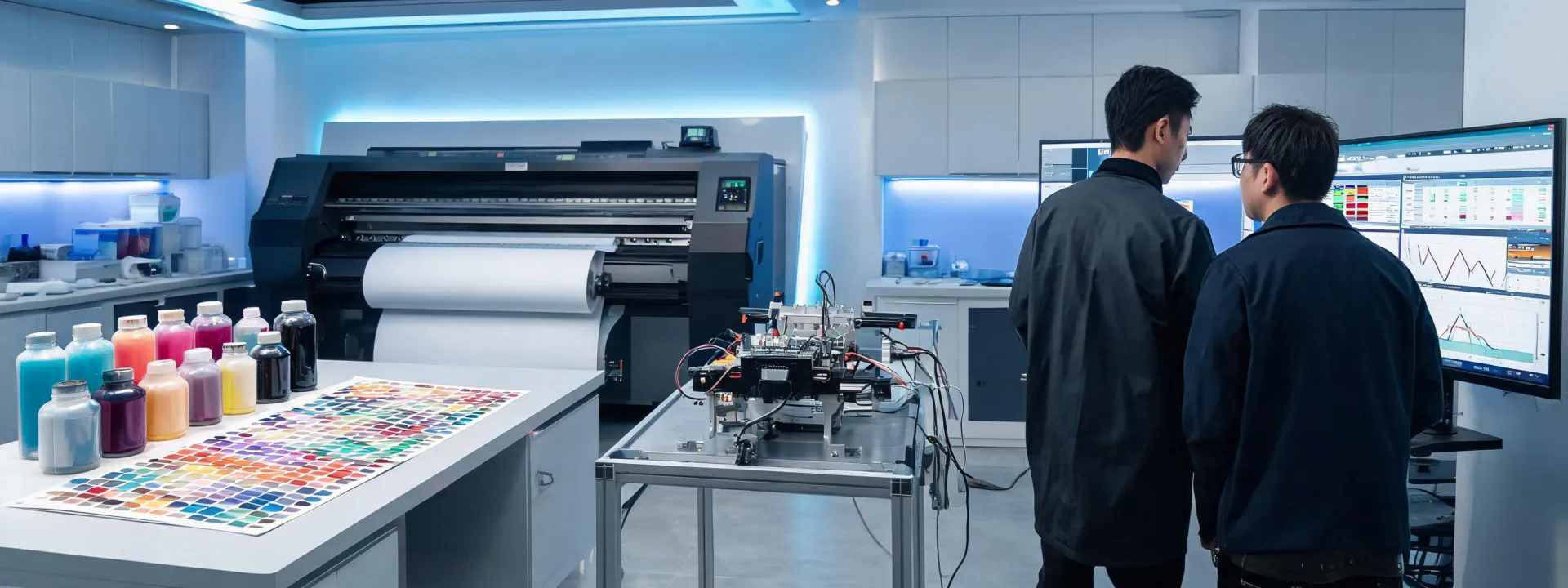
Digital printer research bench with ink channels and calibrated color samples
Innovation focus

Mimaki Innovation Dashboard

This dashboard tracks print technology progress: ink behavior, printhead protection, media qualification, color repeatability, and service learning loops. The focus is the evidence a production team can use to judge whether a digital printer platform will keep improving after installation.

Metrics that matter

Innovation metrics that matter inside a print shop.

Ink recoveryTrack restart routines, white ink circulation, nozzle checks, and waste sheets after idle periods.88%
Media fitRecord approved films, textiles, vinyl, rigid boards, primers, and finishing notes for repeat orders.82%
Color repeatabilityCompare proof references, profile drift, daily checks, and accepted delta targets across operators.91%
Operator responseMeasure how quickly staff diagnose banding, adhesion issues, tension changes, and cure variation.79%

Innovation is valuable only when it changes everyday production behavior. A printer can carry advanced ink technology and still disappoint if the staff cannot maintain it, if media is stored incorrectly, or if color references are not controlled. The dashboard approach turns innovation into practical checkpoints. It helps buyers ask how the ink system responds to pauses, what happens when material lots change, and how the printer communicates maintenance needs before quality falls below customer expectations.

Research downloads

Documents to request during an innovation review.

Ink compatibility worksheet

Use it to compare white ink handling, UV adhesion, textile transfer behavior, and cleaning requirements.

Request PDF

Color workflow checklist

Useful for profile planning, proof approval, operator training, and repeat-order acceptance records.

Request PDF

Media qualification log

Captures substrate lots, environmental conditions, cure settings, and finishing notes for future production.

Request PDF
Test print to production

A vertical path from test print to production learning.

Stage 1

Application proof

Output is judged on target material, image coverage, adhesion, hand feel, readability, or finishing fit.

Stage 2

Workflow validation

Operators test loading, cleaning, curing, transfer, take-up, cutting, and inspection under realistic order pressure.

Stage 3

Repeat-order control

Color references, maintenance routines, and media notes become the internal standard for future jobs.

Stage 4

Service feedback loop

Field observations guide training updates, consumable planning, and settings refinement for the next application.

Request an innovation review for your print room.

Use the form to describe the print technology question that is blocking a purchase, upgrade, or application launch.

Request Innovation Review